Why your skincare disappoints (and not these)
There's that moment, very recognizable. You apply your cream. Lovely texture. Perfect glide. Skin looks softer, almost immediately. And then... two hours later, it's as if nothing really changed. Or worse: your skin feels tight again, your complexion dull, minor imperfections untouched. You tell yourself that "it doesn't work for me." That your skin is complicated. Or that you just haven't found the right product yet. Because, ultimately, not all skincare acts the same way. In reality, in many cases, the problem isn't your skin.
The problem is the formula. And especially one detail that is almost never clearly explained to you, even though it dictates a huge part of a product's performance: the proportion of water. This water provides comfort, sensoriality, and ease of spreading. And, mechanically, it dilutes everything else.
Water, the invisible ingredient that fills (almost) everything

In most traditional cosmetics, water isn't a "little extra." It's the base. Literally.
On an INCI list, it appears as Aqua or Water and is very often listed first. This is no accident; it's an indicator of quantity: ingredients are listed in descending order down to 1%. So when water is at the top, it is the predominant ingredient.
And in many formulas on the market, water can represent 70% to 90% of the product. Yes, 70% to 90%. This is common in:
- lotions and toners, obviously,
- hydrating gels,
- many "light" creams,
- some aqueous serums.
Why so much water?
Because water is an excellent solvent for a large number of hydrophilic ingredients. Because it allows for fine, comfortable textures. Because it simplifies manufacturing. And also, let's be frank, because it's inexpensive compared to high-purity active ingredients or sophisticated delivery systems.
This isn't "bad" in itself. Water is a functional ingredient. The problem begins when this aqueous base becomes the bulk of the formula, and the rest is confined to a tiny space.
Dilution: what 80% water truly implies

Imagine a 100g formula. If it contains 80g of water, that leaves 20g for everything else: humectants, emollients, surfactants, preservatives, potential fragrances, texture polymers, chelating agents, pH adjusters… and active ingredients.
However, a formula must be stable and safe. It must be preserved. It must have correct viscosity. It must remain homogeneous. It must smell "good" or at least neutral. It must spread without pilling. And none of that comes free in formulation.
So, in reality, active ingredients don't get all the "rest." They share space with the product's very structure.
This is where dilution becomes a concrete issue: the more predominantly aqueous the base, the more precise one must be about what is included, at what level, and under what stability conditions. Otherwise, you end up with a product that is mostly… textured water.
And it shows: skin feels pleasant at the moment, but effectiveness plateaus.
"Hydration" doesn't always mean performance

Another point that creates a lot of confusion: the difference between immediate sensation and actual effectiveness.
Immediate sensation is often about physics
Water, humectants (glycerin, propanediol, butylene glycol, pentylene glycol, sodium PCA…), certain polymers, and silicones provide rapid effects:
- slippery feel,
- "plumped" skin for a few minutes,
- soft film,
- optical blurring effect.
It's pleasant. And it's not a trick; it's part of the experience. But it's not necessarily a sign of deep biological action.
You can feel intense comfort with a product that, in the long term, does little to change the quality of the skin barrier, or low-grade inflammation, or oxidation, or pigmentary disorders.
Actual efficacy, however, is a matter of biology and dosage
To influence the skin, you need:
- a relevant active ingredient,
- a sufficient concentration,
- a stable form,
- a compatible delivery system,
- and skin capable of tolerating and integrating it.
Without an effective dose, no effect. Without stability, no effect. Without formula coherence, no effect.
And when a formula is heavily diluted in active ingredients because the base takes up almost all the space, it's easier to understand why the result is sometimes... subtle. Or even non-existent.
The skin barrier: the true ultimate judge

We talk a lot about "active ingredients." But the skin is not a sponge. It is a boundary. A living, intelligent, selective organ.
The outermost layer, the stratum corneum, functions like a "bricks and mortar" structure: corneocytes (the bricks) and intercellular lipids (the mortar). Among these lipids, we find ceramides, cholesterol, and free fatty acids, arranged in very specific lamellar organizations.
When the barrier is strong, it:
- limits transepidermal water loss (TEWL),
- reduces the penetration of irritants,
- helps the skin remain calm,
- maintains correct enzymology (desquamation, maturation, balance).
When it is weakened, everything changes. And often, it's subtle at first: tightness, diffuse redness, discomfort, skin that "drinks" everything and still demands more.
This is where many skincare products disappoint, because they confuse two things:
- providing water (or giving a sensation of water),
- helping the skin retain water.
The skin retains water thanks to a coherent lipid barrier and natural moisturizing factors (NMF) present in the stratum corneum. If a product is mostly water, it can wet the surface. But if the barrier leaks, the water evaporates quickly. And you find yourself reapplying, again and again, with the impression that "it's not lasting."
This is not sustainable hydration. It's a temporary refreshment.
Why highly aqueous formulas are so common (and so appealing)

It must be said: water-rich formulas are easy to love. They check many marketing boxes.
- They are light.
- They give an immediate effect, thus quick satisfaction.
- They seem to suit many skin types.
- They layer well under makeup.
- They allow for stories of "freshness," "jelly," "water cream."
And they also sometimes give a sense of security: "it's gentle, it's water." Whereas tolerance doesn't depend solely on the amount of water, but on the entire system: solvents, preservatives, residual surfactants, fragrance, allergens, pH, and of course, active ingredients.
The paradox is that a highly aqueous formula often requires a more robust preservative system, simply because water is an ideal environment for microorganisms. This detail is rarely mentioned, but it's part of the equation.
Concentration of active ingredients: what your skin truly "receives"

In the world of Kōsmopellis, the question isn't just "which active ingredients?", but "at what effective concentration?". And "effective" means: consistent with data, with physiology, and with stability.
An active ingredient at 0.1% can be very relevant if it's a molecule active at a very low dose and well formulated. Conversely, an active ingredient at 5% can be almost decorative if it's poorly chosen, unstable, or neutralized by the formula.
But in highly water-rich skincare, a classic phenomenon is often observed: many "interesting" ingredients at the end of the INCI list. The label becomes narrative. It tells a story of extracts, vitamins, ferments, rare plants. Except that in formulation, poetry doesn't replace dose.
And yes, a high proportion of water mechanically dilutes the active ingredients present in the product. This is not an opinion. It is an arithmetic consequence. The more space the base occupies, the less room there is for high concentrations, unless the cost explodes, or texture or stability are sacrificed.
This is where certain "not those" skincare products distinguish themselves: they don't start with a formula designed to be mostly water, then decorated with active ingredients. They start with an architecture where the functional phase is designed to deliver, support, and strengthen.
The signs that reveal a product that leaves you wanting more

A few simple clues, without becoming obsessed with INCI.
- Your skin looks good right after application, then quickly reverts.
- You feel the need to reapply during the day.
- You experience immediate comfort, but no progress on texture, sensitivity, or dehydration lines.
- Your skin tolerates the product, but doesn't improve. Everything remains "the same."
- The product is very sensory, but you can't associate its use with measurable change.
Again, this is not a criticism of water. It is a clarification on formula density and the concept of "dose."
So, what's different in "not those"?

What changes is the formulation intention.
A product designed to perform doesn't just aim for a pleasant feel. It aims to make the skin work, without being aggressive. To support the skin barrier so that hydration becomes lasting. To offer active ingredients at consistent concentrations. And to build a base that is not just filler, but a true vehicle.
Often, the difference lies there: in the vehicle. In the system. In the balance.
A product can be luxurious in its fragrance and texture. Or luxurious in its scientific design. The best do both, of course. But when you've already spent, tested, hoped, you quickly feel it: the elegance that matters is the elegance of the long-term result.
And that's exactly why so many routines end up disappointing: they are built on immediate sensations, while the skin responds to consistency, coherence, the barrier, and the dose.
In practice: what you can expect from truly effective skincare

Without promising the impossible, a better-formulated product, denser in functional phase, more respectful of the barrier, should gradually provide:
- hydration that lasts, with fewer daily fluctuations,
- more stable skin, less reactive to changes (cold, heating, friction),
- a more even feel, less "sticky skin,"
- a reduction in signs of dehydration linked to barrier leakage,
- and, depending on the active ingredients, a visible improvement in radiance, imperfections, and comfort.
It won't always be spectacular in 24 hours. And that's normal. Skin isn't an Instagram filter. It reorganizes. It repairs. It learns.
But after a few weeks, you should feel a difference that doesn't solely depend on when you just applied the product. A difference that lingers a bit.
It's often then that one finally understands why some skincare disappoints. And why others, rarer ones, do the exact opposite.
They don't sell you water. They give you a formula. A real one.
Frequently asked questions
Why do some skincare products give an immediate feeling of effectiveness... without lasting results?
Many traditional skincare products provide an immediate feeling of freshness, comfort, or plump skin due to their high water content and certain surface hydrating agents.
However, when active ingredients are present in low concentrations or remain primarily on the skin's surface, the effects can be temporary and essentially sensory.
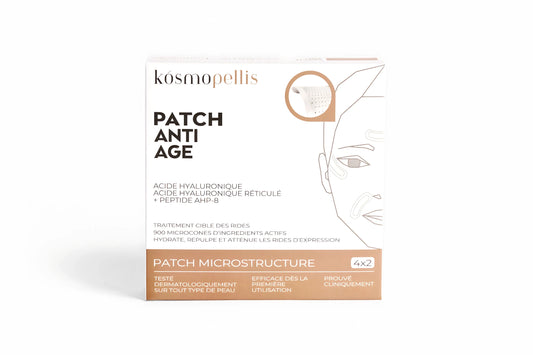
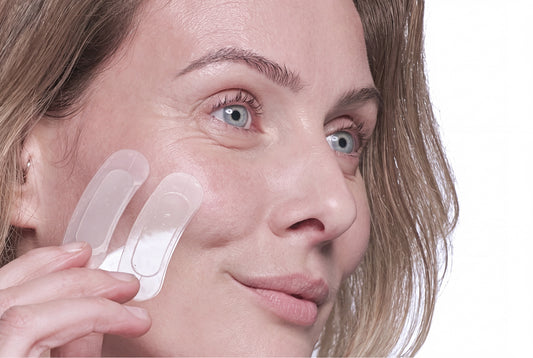
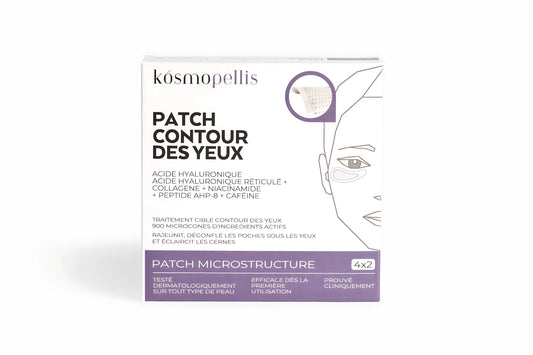
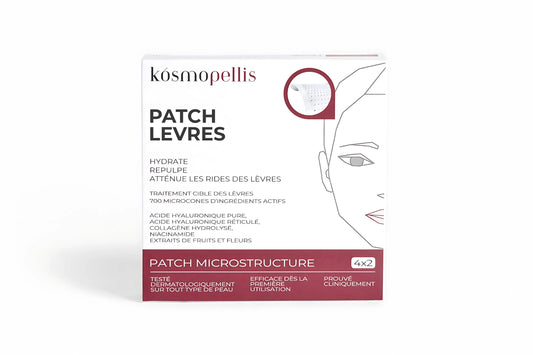
At Kōsmopellis, microstructure patches are based on a different approach: the micro-cones consist of 100% active ingredients and gradually diffuse the active ingredients into the superficial layers of the epidermis.
Why is water so widely used in traditional cosmetics?
Water is the main ingredient in many traditional creams and serums. It allows for fluid, fresh, and pleasant textures to apply.
In some formulations, it can represent up to 70-90% of the final product, which implies significant dilution of the active ingredients present in the product.
This approach often prioritizes the product's sensoriality, but can limit the actual concentration of functional ingredients applied to the skin.
What differentiates Kōsmopellis patches from traditional skincare?
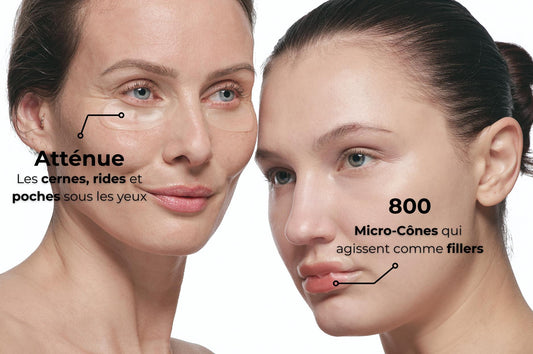
Kōsmopellis patches use self-dissolving microstructure technology designed to optimize the diffusion of active ingredients.
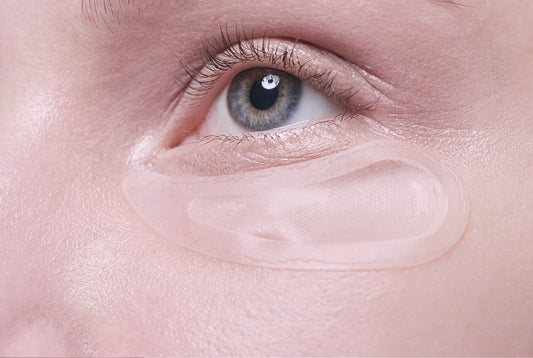
Unlike traditional skincare applied to the surface, micro-cones gently penetrate the superficial layers of the epidermis before gradually dissolving upon contact with the skin.
This technology allows for more targeted diffusion of active ingredients and promotes their interaction with the skin.
Why is active ingredient diffusion so important?
The skin naturally has a protective barrier—the stratum corneum—whose role is to limit the penetration of external substances.
This is why a large proportion of the active ingredients in traditional skincare remains on the skin's surface.
The performance of a product therefore depends not only on the ingredients it contains but also on its ability to effectively deliver them where the skin can truly use them.
What active ingredients are found in Kōsmopellis patches?
Kōsmopellis patches combine active ingredients selected for their moisturizing, smoothing, and plumping properties.
Depending on the specific product, formulas may contain hyaluronic acid, hydrolyzed collagen, peptides, niacinamide, or caffeine, integrated directly into the active microstructures.
Why does my moisturizer seem effective at first but do nothing after a few hours?
The immediate feeling of comfort and suppleness often comes from the water and humectants present in the cream. However, if the formula is too diluted with water (often 70 to 90%), the beneficial active ingredients are in low concentration, which limits real long-term effectiveness.
What role does water play in cosmetic formulations?
Water is the main ingredient in most traditional cosmetics, acting as a solvent for hydrophilic ingredients and providing a light, pleasant texture. It also facilitates manufacturing and reduces product cost. However, too high a proportion of water can dilute essential active ingredients.
How can you tell if a cosmetic product contains too much water?
On the INCI list, water (Aqua/Water) is generally listed first because ingredients are ranked in descending order of quantity. If it's at the top, it means it's the main component, often between 70% and 90% of the product, which can indicate significant dilution of the active ingredients.
Why can a formula with a lot of water have limited effectiveness?
A very aqueous formula must include not only active ingredients but also various agents necessary for stability, preservation, texture, and fragrance. This reduces the space available for the active ingredients themselves, which can result in a product that provides a pleasant sensation but little real action on the skin.
Does an immediate feeling of hydration mean the product is effective?
Not necessarily. Rapid effects such as slipperiness or plumped skin are often due to physical components like water, humectants, or certain polymers. These pleasant sensations do not guarantee deep biological action or lasting changes to the skin.
How to choose a truly effective moisturizing product?
Choose products whose formula properly balances the proportion of water and effective active ingredients. Find out about the concentration of key ingredients and favor those that offer stability and optimized composition rather than just an immediate sensation. Carefully reading the INCI list and expert advice can help make an informed choice.