Eye contour: why does this area age faster than the rest of the face?
The eye contour: why does this area age faster than the rest of the face? This question often arises when the first signs of skin aging appear. The eye contour immediately attracts attention, as it strongly influences overall appearance: dark circles, puffiness, fine lines, and sagging alter expression and create a tired look. As the most delicate area of the face, it is the first to reveal the marks of time and requires particular vigilance from those who wish to maintain a youthful and fresh appearance.
1. The anatomical specificity of the eye contour

The thin skin around the eyes is one of the main anatomical characteristics of this area. On average, it is nearly five times thinner than the skin on the rest of the face, making it particularly fragile and sensitive to external aggressions. This extreme thinness accelerates the manifestation of visible signs of skin aging.
Several structural elements explain this vulnerability:
- The underlying dermis is very thin, reducing the skin's ability to defend itself against sagging.
- The almost complete absence of subcutaneous adipose tissue deprives this region of a protective and cushioning layer. As a result, the slightest mechanical or environmental stress leaves a deeper and more lasting mark.
- The concentration of elastin and collagen fibers is significantly lower compared to the rest of the face. These two components are essential for maintaining skin tone and elasticity. Their scarcity in the eye contour leads to a rapid loss of firmness, thus facilitating the early appearance of fine lines and wrinkles.
The unique architecture of the eye contour explains why the first signs of aging appear so early, making this area particularly demanding in terms of prevention and care.
2. Vulnerability due to low sebum production around the eyes

The periorbital area has a particularity: it is almost devoid of sebaceous glands. These glands, elsewhere on the face, play an essential role in skin protection through the production of sebum. This sebum, in combination with sweat, forms a hydrolipidic film that acts as a natural barrier against external aggressions and limits water evaporation from the skin's surface.
Around the eyes, the almost complete absence of sebaceous glands deprives this region of this protective film. The consequences are immediate:
- Increased dehydration: without lipid protection, water evaporates more quickly, leading to dryness and discomfort.
- Exacerbated sensitivity: the skin becomes more vulnerable to irritating agents or pollutants.
- Early appearance of signs of aging: wrinkles, fine lines, and sagging appear more quickly due to the lack of a natural shield.
This skin fragility explains why the eye contour requires specific care adapted to its unique nature.
3. The impact of constant muscular activity on eye contour aging

The periorbital muscles are used throughout the day. On average, we blink nearly 10,000 times a day. This repetitive movement weakens the already thin skin around the eyes and promotes the early appearance of wrinkles and fine lines — a key phenomenon for understanding why the eye contour ages faster than the rest of the face.
Every smile, frown, or burst of laughter engages the periorbital muscles. Repeated facial expressions cause micro-contractions that, over time, create persistent folds on the skin surface. Crying or emotional moments also accentuate this mechanism: the skin, subjected to regular tension, gradually loses its tone and elasticity.
To remember: the extreme frequency of eye movements and the intensity of daily emotions accelerate skin sagging and the premature appearance of visible signs of aging around the eyes.
The unique muscular dynamics of this area thus explain an essential part of the accelerated aging of the eye contour, distinct from other facial regions.
4. Increased cellular senescence in the eye contour: a key factor in rapid aging

The phenomenon of cellular senescence plays a crucial role in accelerating skin aging around the eyes. This is a natural process where cells gradually stop dividing and lose their ability to function normally. This loss of activity significantly impacts the periorbital skin.
- Decreased DNA repair: eye contour cells show reduced efficiency in correcting DNA damage over the years. This leads to an accumulation of cellular defects, weakening skin structure and cohesion.
- Slowed cell renewal: epidermal cell renewal becomes less efficient. As a result, the skin loses vitality, heals more slowly, and shows visible signs of aging more quickly.
This cellular fragility makes the periorbital area particularly prone to the rapid appearance of wrinkles, marked sagging, and irregular texture, illustrating the crucial importance of local repair mechanisms for maintaining a youthful appearance.
5. Visible consequences of rapid aging around the eyes: fine lines, dark circles, and skin sagging

The periorbital area reveals the first signs of aging very early. Several characteristic manifestations often appear as early as the thirties, sometimes even before.
- Fine lines and expression wrinkles
- Fine lines appear quickly due to the extreme thinness of the skin and its constant exposure to micro-movements. These fine lines are concentrated mainly at the outer corner of the eye ("crow's feet") and under the eye. Expression wrinkles, accentuated by smiling or squinting, become permanent over time when the skin struggles to regain its initial shape.
- Skin sagging
- The gradual sagging of the eye contour results from a loss of elasticity and a lack of structural support. The decrease in collagen and elastin fibers, coupled with the thinning of the dermis, leads to visible sagging: the upper eyelid may appear to droop slightly, while the lower eyelid appears more hollow and less firm.
In addition to these signs, dark circles often appear, accentuated by fragile microcirculation or pigment accumulation. The overall effect gives the eyes a tired or sad appearance, even at rest, which explains why so many people seek to specifically treat this delicate area.
6. Prevention and specific care to slow down eye contour aging: practical tips to adopt now!

The eye contour requires targeted strategies to limit the speed of skin aging in this vulnerable area. Adopting an adapted eye contour care routine relies on several essential pillars:
- Specific hydration: favor creams or serums enriched with hyaluronic acid, peptides, or ceramides, capable of strengthening the hydrolipidic barrier and maintaining deep hydration.
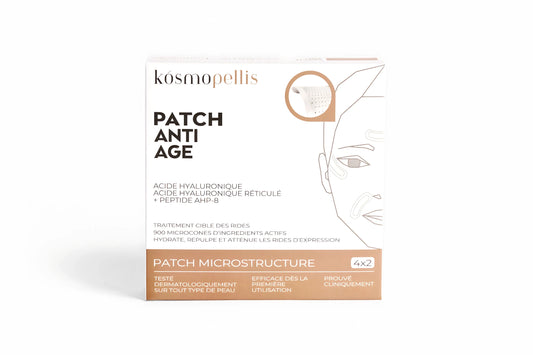
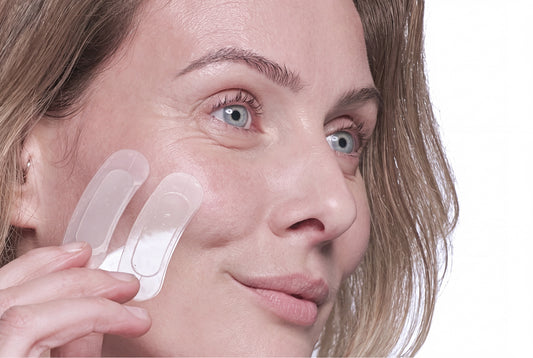
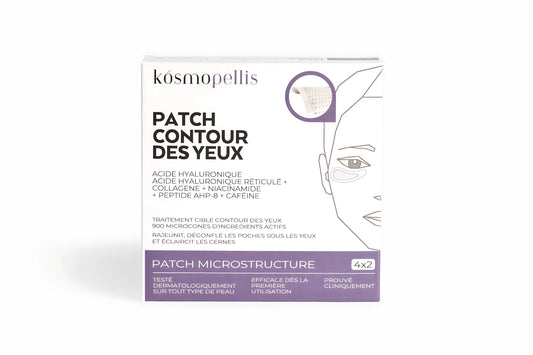
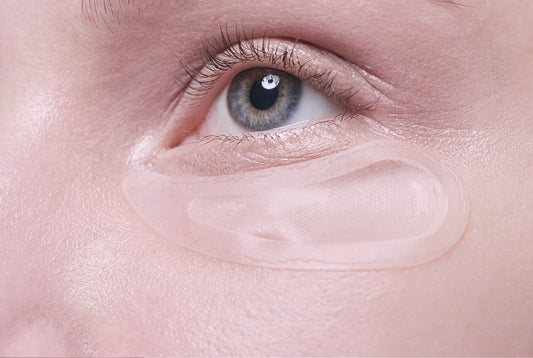
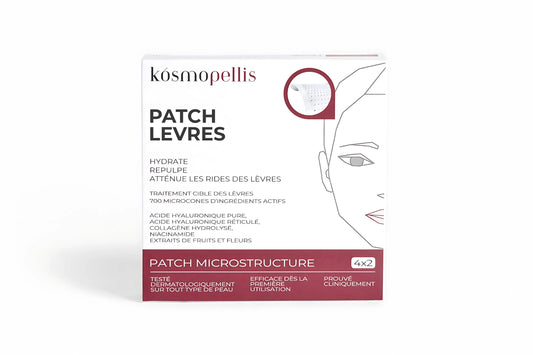
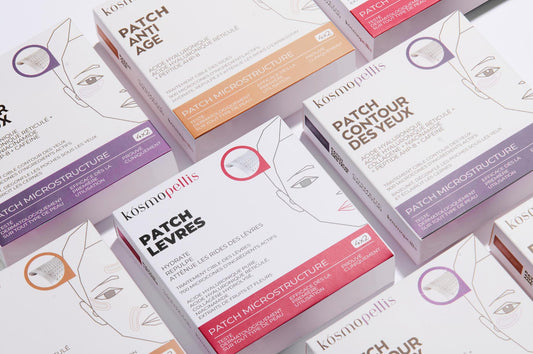
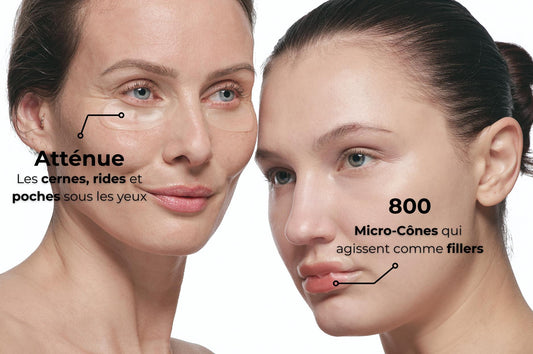
- Kósmopellis microstructure patches : these innovative patches incorporate a soluble microneedle technology to deliver active ingredients such as collagen or vitamin C directly into the deep layers of the skin. Their targeted action promotes a visible reduction in fine lines and improves periorbital elasticity.
- Protection against external aggressions: daily application of a facial sunscreen, including on the eye contour, remains essential. UV filters prevent cellular oxidation, thus limiting early signs of aging.
- Adapted routine: avoid rubbing or stretching the area excessively during makeup removal. Opt for gentle and precise movements accompanied by non-irritating products.
Eye contour: why does this area age faster than the rest of the face? The answer lies in the combination of structural fragility and continuous exposure to environmental factors. Taking early care of this region helps preserve a fresh look longer.
Conclusion
Premature aging of the eye contour results from the extreme thinness of the skin, lack of sebum, intense muscular activity, and accelerated cellular senescence. These factors make this area particularly vulnerable, explaining why it ages faster than the rest of the face.
Adopting appropriate facial care is therefore a necessity to maintain a radiant look and avoid a tired or aged appearance too soon. Relying on a targeted daily routine helps to better protect the eye contour and durably slow down the appearance of signs of aging.